
To commemorate 20 years of serving the community, the most recent cohort of Social Entrepreneurs (pictured below) were recruited to conduct an impact analysis of the Social Entrepreneurship (SE) program. One team focus on the impact of the SE on our local community organizations, some forty clients since 2006. Another student team focussed on the impact of one of our long term clients, Local Roots on the larger Wooster community. This post previews some of the results of the impact analysis of the SE program.
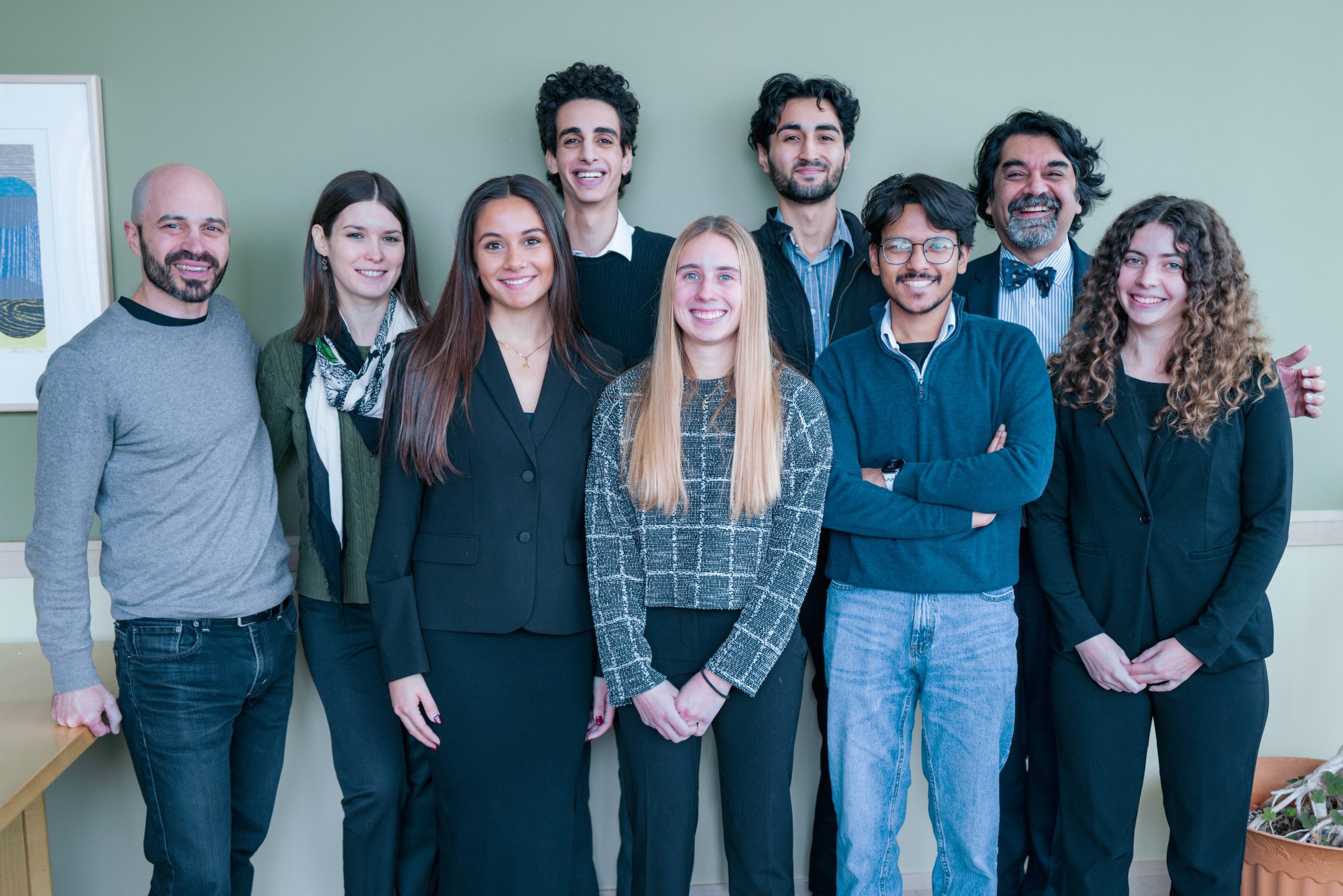
From left to right: Dr’s Mariola and Long, Priya Nehria, Othemane Oumnad, Lizze Hardy, Kovid Pathak, Faiaz Azmain, Dr Moledina and Maddie Veitch
In a world with many urgent challenges, like poverty, inequality, and climate change, the United Nations came together to negotiate and select a framework for global development. Although the Social Development goals were created after the start of Wooster’s SE program, they are still applicable to the program’s intention. In 2022, the UNs Partnership Framework outlined how organizations and programs, like SE, could partner with the community to further social development goals. (The SDG Partnership Guidebook). Many of the “best practices” for partnering outlined in this guide have been part of the organizational DNA of Social Entrepreneurship at Wooster. For example, the Guidebook discusses the role of Academia as a “trusted neutral convenor” that helps to conduct “research and analysis”. It has “evaluative capacity” and can provide “evidence-based policy advice”, “teach and build capacity” in organizations and communities. (SDG Partnership Guidebook, page 32). One way to evaluate impact is to assess the range of organizations the SE program has consulted with. Our analysis found that over 20 years, the program has helped to further the missions of organization across all but one of the United Nations Social Development Goals. The top three goals SE keeps returning to are “Quality Education’ and “Good Health and Well Bring” and “Sustainability”.
Building Bridges of Innovation and Dialogue on Social Change
For 20 years, the Local Social Entrepreneurship (Local SE) program has leveraged the talent of College of Wooster students and their advisers to serve the missions of community-based organizations in the region surrounding the College. Every year, faculty advisers partner with community organizations to design a community-based learning project to improve the organization’s (financial) sustainability and encourage innovation. Students from all majors are recruited to research and write business plans for social purpose organizations (nonprofits) in teams over a semester. Unlike other experiences on the Wooster campus, this experiential learning opportunity is deployed through a credit-bearing seminar and curated by faculty in collaboration with a variety of internal and external stakeholders. Therefore, Local SE is a bridge between academic learning and community driven change. Since 2005, the Local SE program has continued to create and maintain meaningful partnerships that drive measurable community impact.
The students conducted an ethnographic study of a selected number of former SE clients. In addition the analyzed interviews from past projects to find considerable impact on a number of domains.
Nature of the impact
Students found that many of our clients mostly come to us in the early ideation phase of a new project. They often have very limited resources to allocate towards new ideas. Our SE student teams filled critical gaps in expertise and research time that was not available internally within the organization. One client said “But as a non-profit you don’t necessarily have all the human resources that you need, and so to have other people to help study and think about those things is so useful. What a resource!” Another client described the research outputs from the students as transformative for organizational planning. They said “It was the fact that they drove that research. That was a massive research project and put together a huge report and really a roadmap for [the organization] that didn’t exist before.” For others, the students’ analysis served as a foundation, providing reference materials, data toolkits, or frameworks that guided future internal efforts. Across all organizations, the work produced by student teams bridged gaps in expertise, moving stalled questions to actionable solutions, and supporting organizational leaders in advancing key priorities with credible, evidence-based insight.
The Local SE program was successful in starting dialogue, research, and all the clients interviewed discussed how student research helped them learn things that were unexpected. For example, one client mentioned “Coming up with things we hadn’t even considered, like transportation routes, like changing a model from just being a movie theater to having diversified programming.”
Implementation
Since 2006, the Local SE program has partnered with more than 40 local and regional organizations. According to the cofounder of the program, 31 final projects have been implemented in some form by client organizations, implying a 77% implementation rate.
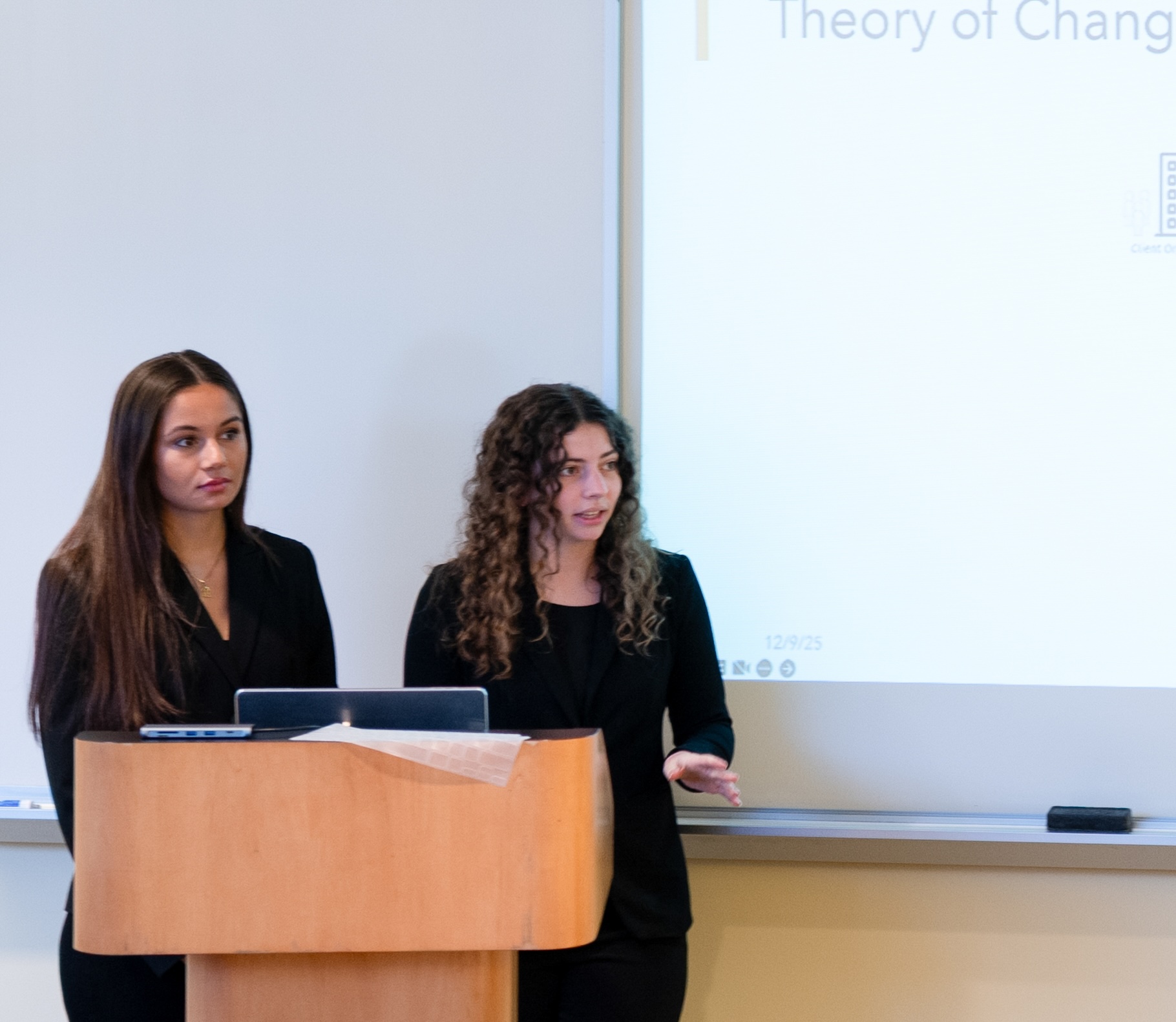
To provide more detail on implementation, the students conducted an ethnographic study of six organizations that came to SE over eight projects. The student report coded implementation in three categories: fully implemented, partially implemented, and not implemented. With this coding, seven of the eight projects in the interview sample were implemented at least partially, while one was not implemented, indicating a high rate of at least partial uptake. They found considerable heterogeneity in the extent and durability of implementation. Two barriers to the implementation of the earned revenue strategies with our client organizations was leadership turnover and human resource capacity constraints within the organization.
An analysis of a sample of client organizations Form 990 tax forms showed that the earned revenue initiatives that SE conducted research for now provide about half a million dollars in value for the organization every year.
How the Change Happens
Local Social Entrepreneurship’s impact on partner organizations can be understood as three interlocking domains: capacity-building, generative dialogue, and durable strategic shifts. It first expanded organizational capacity by supplying focused time, analytic expertise, and sector knowledge, allowing partners to undertake research, market and feasibility studies, and strategic planning that they described as “massive,” “transformative,” and otherwise impossible within existing staff and board resources. Just as importantly, LSE convened a dedicated space for dialogue where stakeholders could step outside day‑to‑day firefighting to name deficits, reframe problems, surface new ideas, and align around mission and priorities; this structured conversation repeatedly led to clearer recognition of service gaps, stronger asset‑based thinking, and more coordinated approaches to client needs and community impact. Finally, the work translated into enduring changes: student research and business plans informed new hires and staffing models, inspired new or diversified programs, reshaped how organizations conceptualize issues like poverty, and provided roadmaps and toolkits that leaders continued to draw on over time. SE’s influence often persisted well beyond the original semester as a backbone of analysis, visioning, and strategic guidance in the local social-impact ecosystem.