Archive for the ‘Impact’ Category

Assessing 20 years of impact

Monday, July 13th, 2026

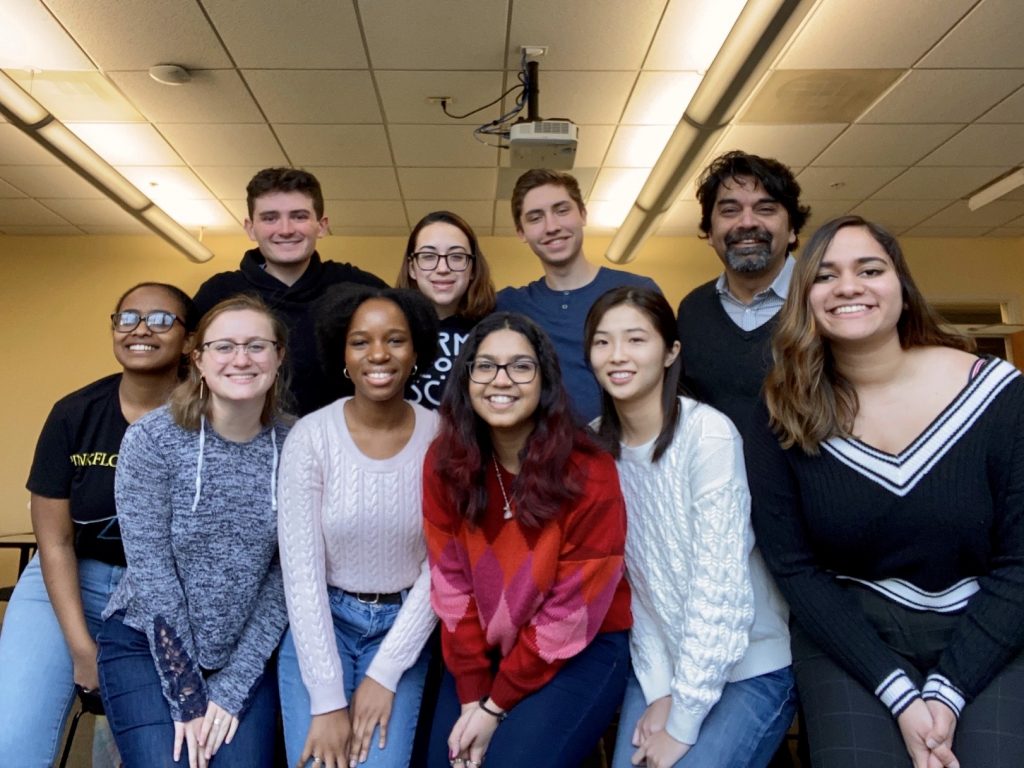
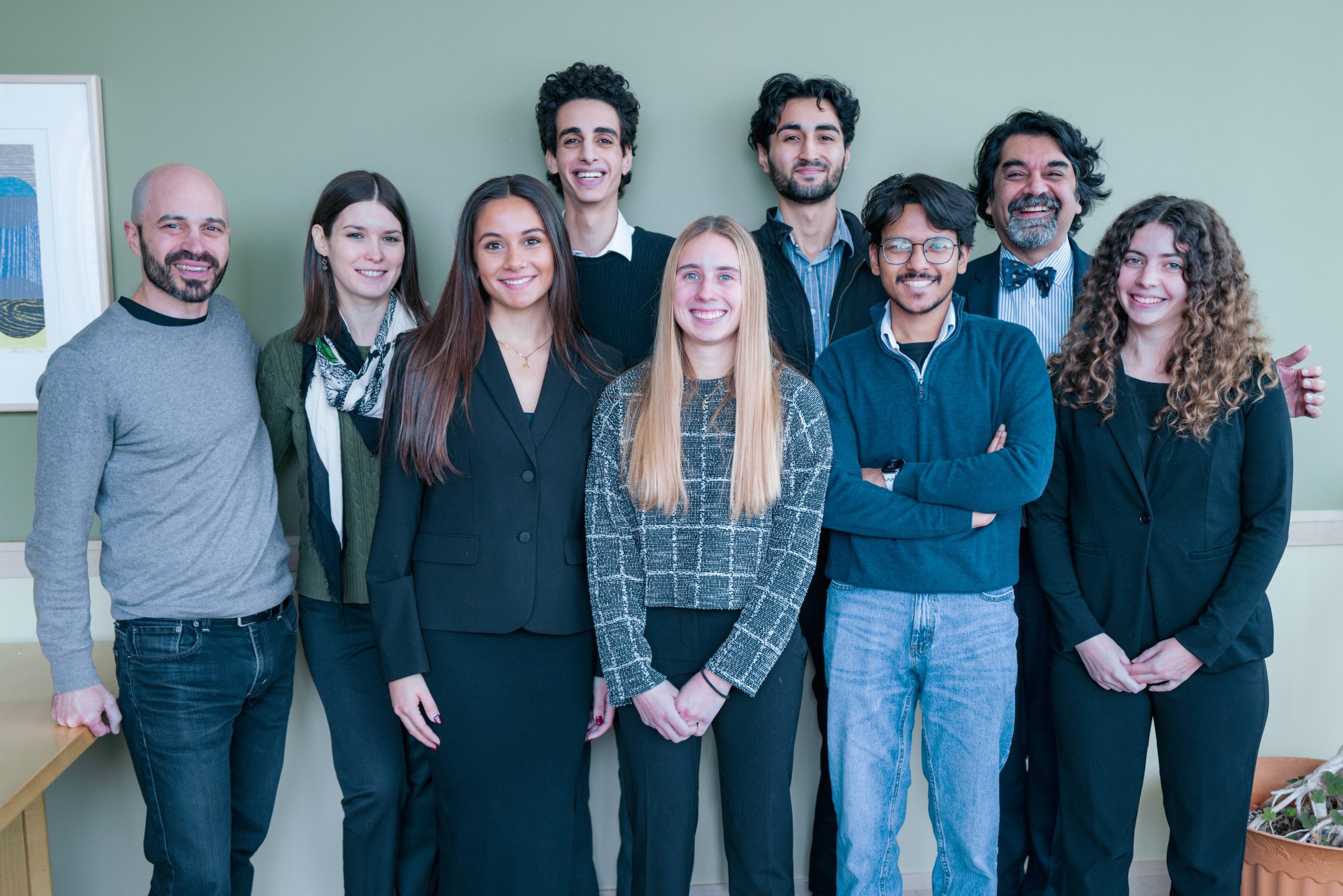
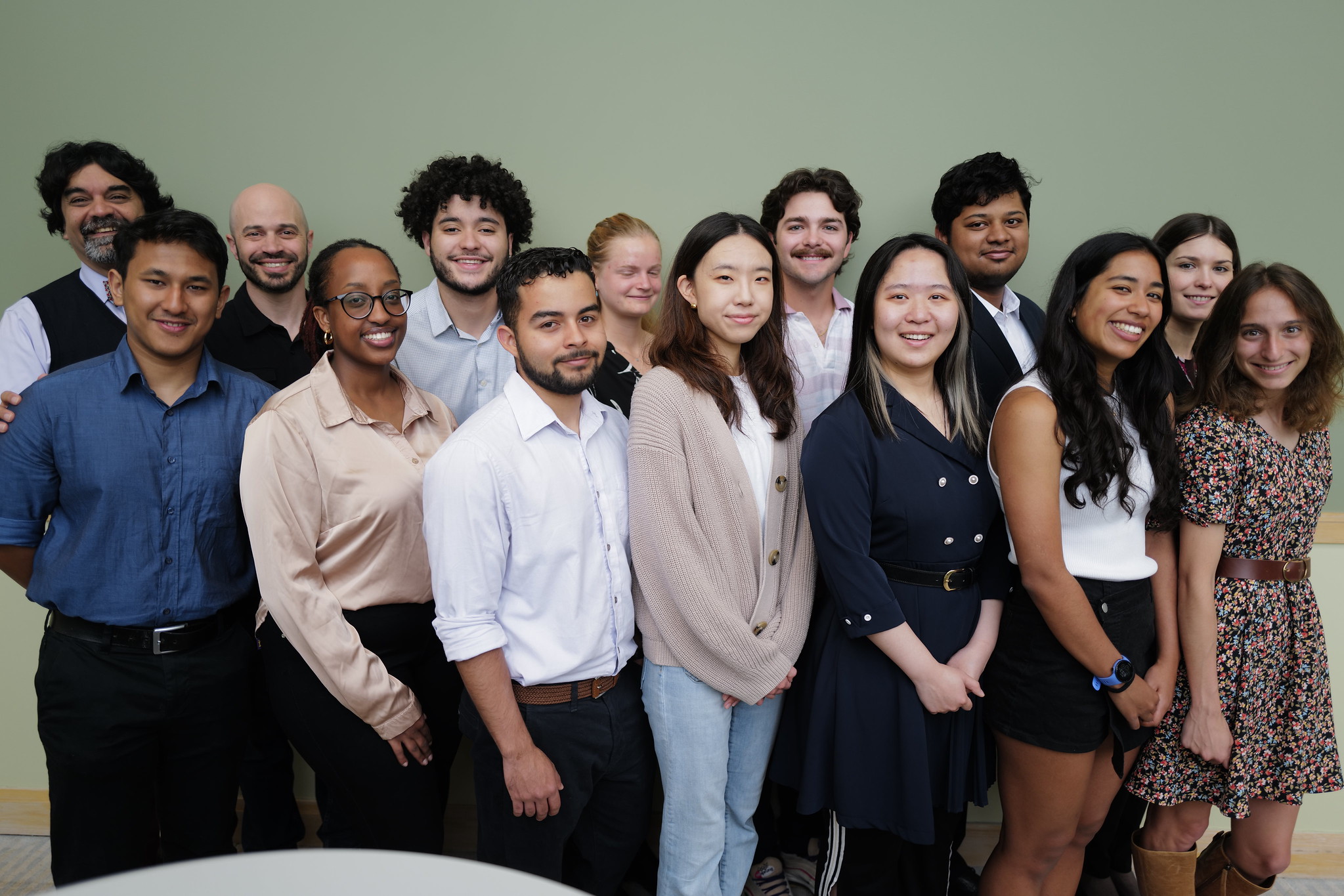
To commemorate 20 years of serving the community, the most recent cohort of Social Entrepreneurs (pictured below) were recruited to conduct an impact analysis of the Social Entrepreneurship (SE) program. One team focus on the impact of the SE on our local community organizations, some forty clients since 2006. Another student team focussed on the impact of one of our long term clients, Local Roots on the larger Wooster community. This post previews some of the results of the impact analysis of the SE program.
Assessing 20 years of impact

From left to right: Dr’s Mariola and Long, Priya Nehria, Othemane Oumnad, Lizze Hardy, Kovid Pathak, Faiaz Azmain, Dr Moledina and Maddie Veitch

In a world with many urgent challenges, like poverty, inequality, and climate change, the United Nations came together to negotiate and select a framework for global development. Although the Social Development goals were created after the start of Wooster’s SE program, they are still applicable to the program’s intention. In 2022, the UNs Partnership Framework outlined how organizations and programs, like SE, could partner with the community to further social development goals. (The SDG Partnership Guidebook). Many of the “best practices” for partnering outlined in this guide have been part of the organizational DNA of Social Entrepreneurship at Wooster. For example, the Guidebook discusses the role of Academia as a “trusted neutral convenor” that helps to conduct “research and analysis”. It has “evaluative capacity” and can provide “evidence-based policy advice”, “teach and build capacity” in organizations and communities. (SDG Partnership Guidebook, page 32). One way to evaluate impact is to assess the range of organizations the SE program has consulted with. Our analysis found that over 20 years, the program has helped to further the missions of organization across all but one of the United Nations Social Development Goals. The top three goals SE keeps returning to are “Quality Education’ and “Good Health and Well Bring” and “Sustainability”.

Building Bridges of Innovation and Dialogue on Social Change

For 20 years, the Local Social Entrepreneurship (Local SE) program has leveraged the talent of College of Wooster students and their advisers to serve the missions of community-based organizations in the region surrounding the College. Every year, faculty advisers partner with community organizations to design a community-based learning project to improve the organization’s (financial) sustainability and encourage innovation. Students from all majors are recruited to research and write business plans for social purpose organizations (nonprofits) in teams over a semester. Unlike other experiences on the Wooster campus, this experiential learning opportunity is deployed through a credit-bearing seminar and curated by faculty in collaboration with a variety of internal and external stakeholders. Therefore, Local SE is a bridge between academic learning and community driven change. Since 2005, the Local SE program has continued to create and maintain meaningful partnerships that drive measurable community impact.

The students conducted an ethnographic study of a selected number of former SE clients. In addition the analyzed interviews from past projects to find considerable impact on a number of domains.

Nature of the impact

Students found that many of our clients mostly come to us in the early ideation phase of a new project. They often have very limited resources to allocate towards new ideas. Our SE student teams filled critical gaps in expertise and research time that was not available internally within the organization. One client said “But as a non-profit you don’t necessarily have all the human resources that you need, and so to have other people to help study and think about those things is so useful. What a resource!” Another client described the research outputs from the students as transformative for organizational planning. They said “It was the fact that they drove that research. That was a massive research project and put together a huge report and really a roadmap for [the organization] that didn’t exist before.” For others, the students’ analysis served as a foundation, providing reference materials, data toolkits, or frameworks that guided future internal efforts. Across all organizations, the work produced by student teams bridged gaps in expertise, moving stalled questions to actionable solutions, and supporting organizational leaders in advancing key priorities with credible, evidence-based insight.

The Local SE program was successful in starting dialogue, research, and all the clients interviewed discussed how student research helped them learn things that were unexpected. For example, one client mentioned “Coming up with things we hadn’t even considered, like transportation routes, like changing a model from just being a movie theater to having diversified programming.”

Implementation

Since 2006, the Local SE program has partnered with more than 40 local and regional organizations. According to the cofounder of the program, 31 final projects have been implemented in some form by client organizations, implying a 77% implementation rate.
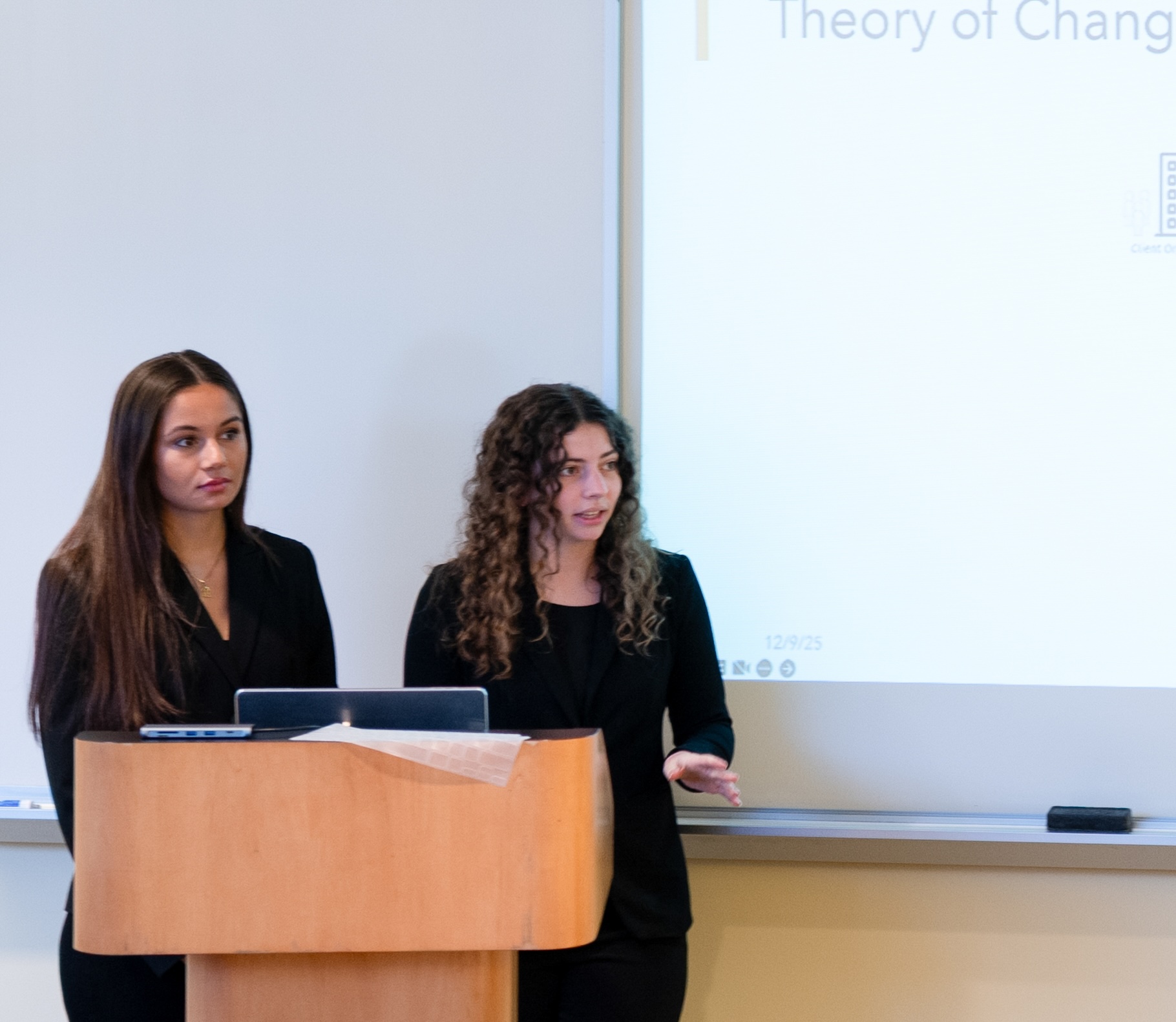
To provide more detail on implementation, the students conducted an ethnographic study of six organizations that came to SE over eight projects. The student report coded implementation in three categories: fully implemented, partially implemented, and not implemented. With this coding, seven of the eight projects in the interview sample were implemented at least partially, while one was not implemented, indicating a high rate of at least partial uptake. They found considerable heterogeneity in the extent and durability of implementation. Two barriers to the implementation of the earned revenue strategies with our client organizations was leadership turnover and human resource capacity constraints within the organization.

An analysis of a sample of client organizations Form 990 tax forms showed that the earned revenue initiatives that SE conducted research for now provide about half a million dollars in value for the organization every year.

How the Change Happens

Local Social Entrepreneurship’s impact on partner organizations can be understood as three interlocking domains: capacity-building, generative dialogue, and durable strategic shifts. It first expanded organizational capacity by supplying focused time, analytic expertise, and sector knowledge, allowing partners to undertake research, market and feasibility studies, and strategic planning that they described as “massive,” “transformative,” and otherwise impossible within existing staff and board resources. Just as importantly, LSE convened a dedicated space for dialogue where stakeholders could step outside day‑to‑day firefighting to name deficits, reframe problems, surface new ideas, and align around mission and priorities; this structured conversation repeatedly led to clearer recognition of service gaps, stronger asset‑based thinking, and more coordinated approaches to client needs and community impact. Finally, the work translated into enduring changes: student research and business plans informed new hires and staffing models, inspired new or diversified programs, reshaped how organizations conceptualize issues like poverty, and provided roadmaps and toolkits that leaders continued to draw on over time. SE’s influence often persisted well beyond the original semester as a backbone of analysis, visioning, and strategic guidance in the local social-impact ecosystem.
A banner year for catalyzing social change!

Wednesday, August 7th, 2024

Students work on social problems and challenges in the community

“We haven’t had these many projects for a long time!” said Dr Mariola.

Last fall, Dr. Matt Mariola (Environmental Studies) and Dr. Amyaz Moledina (Economics) began speaking to various community organizations about several urgent and long-term social needs in Wayne County. Early results from the Wayne County Health Department’s Survey suggested that mental health has become a major concern. There has been a large increase in suicidal ideation, especially amongst children. The unhoused population in Wooster has also been growing, with a recent report showing a worrying upward trend in “homelessness.”

With these challenges in mind, the Wayne Center for the Arts wanted to conduct a study to see if there was appetite to start an Arts Therapy Program based out of Wooster. Community Action of Wayne and Medinawanted to investigate how to move forward on starting a non-profit housing development corporation. Meanwhile, two other organizations that have worked with Wooster students in the past approached the SE program. The Immigrant Worker Project was looking into the feasibility of starting a weekend market to support immigrant entrepreneurs, and the Agroecosystem Management Program (AMP) at Ohio State wanted to research best practices for operating a coordinated long-term agricultural research facility. 

Two additional faculty with sustained teaching commitments to social entrepreneurship, Dr. Melanie Long (Economics) and Dr. Peter Abramo (Entrepreneurship), agreed to join the advising team. With the community commitments secured, the faculty proceeded to recruit students. By Spring 2024, twelve students were invited to participate in the Local Social Entrepreneurship course. This annual experiential learning opportunity is organized as an interdisciplinary seminar focused on making social change happen locally. 

The Local Social Entrepreneurship seminar was developed by faculty from various academic departments. Since the seminar was first offered in 2006 , the teaching faculty have accumulated many learning modules that can be flexibly tailored to the projects. They have also built a reputation of curating and catalyzing  transformative social change rooted in community change organizations.  Over the course of the semester, student teams worked with their assigned clients and advisers to define the problem, collect data from community organizations, and iterate towards a solution. The main findings were presented to the board members and wider stakeholders of each organization.

The LSE Team for 2024: Back Row (LR): Moledina, Mariola, Rayan Dos Passos, Dylan Kretchmar, Leo Widtmann, Faiyaz Hasan, and Long. Front Row (LR): Aryan Tamrakar, Edwidge Rwagasana, Ethan Hunt, Nana Morikawa, Jinfei Liu, Igna Mendez, and Athena Tharenos. Not pictured Mariia Tckach and Abramo

The Wayne Center for the Arts team (Athena Tharenos, Edwidge Rwagasana, and Faiyaz Hasan) found that there was indeed significant demand for mental health therapy in both Wayne and Holmes County. Art therapy was found to have promise as a creative way to reach youth who may be skeptical about traditional therapies. The team developed a financial model to help the Center decide how best to organize the start-up of this initiative. 

The Community Action Wayne/Medina Team (Dylan Kretchmar, Jinfei Liu, and Nana Morikawa) found that an affordable housing program in Wooster is likely to be feasible given considerable community demand, the wide range of government funding opportunities, and strong potential partnerships. However, the challenges associated with rezoning current land bank properties need to be considered and proactively addressed.

The Agroecosystems Management Program Team (Aryan Tamrakar, Leo Widtmann, and Mariia Tkach) found that there are 18 long-term agroecosystem research sites in the US funded by the Department of Agriculture. They interviewed leaders from six sites, combined their insights into a best practices document, and presented to Ohio State personnel on the need for a coordinated approach that would bring stakeholders together and leverage the strengths of the multiple university departments whose work overlaps at the site.   

The Immigrant Worker Project Team (Ethan Hunt, Igna Mendez, and Rayan Dos Passos) developed a financial model for the weekend market based on examples of immigrant markets elsewhere in the country. After conducting interviews with key stakeholders, they found that the market was financially feasible, especially if it was able to grow from serving immigrants to being a space where local Ohioans might experience Latin culture. “The students were interested, not just in our plans but our lives and dreams.  They wanted to help us make a better future for our family and community, a reality.” Said Dilcia Ramirez Flores. (AMIGAS Cooperative member & community market vendor)

The Social Entrepreneurship (SE) program was conceived by a group of faculty and staff in 2005. Launched in 2006 with an inaugural grant from the Burton D. Morgan Foundation, it catalyzes social change in the community by connecting clients with real organizational problems and student teams to find meaningful solutions. SE is the process of creative thinking, innovation, risk-taking, and analysis that creates opportunities with sustainable social and economic value with sensitivity to unintended consequences. The program’s goals are simple: to expose students, faculty, staff, and client organizations to the process of social entrepreneurship through experiential learning, and to encourage innovation and sustainability in the social enterprise sector. 

SE has worked with more than 40 clients since 2005 and provides more than $500,000 in community value every year. Many former clients have proposed new business enterprises that have launched and grown to become important features of the local business ecosystem. Community organizations interested in discussing possible student projects for Spring 2025 can contact Dr. Moledina to schedule a consultation meeting.

To see more pictures of the teams, check out our Flickr feed.

Catalyzing Food Entrepreneurship

Wednesday, August 4th, 2021

Despite the pandemic, the SE program continued its commitment to working with social change organizations. Three students, Claira Schiffrik, Eraj Sikandar, and Keegan King advised by Professor Moledina worked with FoodSphere: the Entrepreneurial Center at Local Roots for the 2021 local SE seminar. FoodSphere is a new start-up organization. FoodSphere aims to cultivate economic growth and sustainability by supporting local farmers and entrepreneurs of value-added agricultural products in Wayne County. The student team researched the structure and operation of U.S. food incubators to understand “How successful food incubators organize and fund themselves”. Over the course of the Spring semester 2021, students conducted interviews on Zoom. They compiled their findings in a report that they presented to the Board of Directors of Food Sphere and other community members who are part of the local food movement in Wooster.

Keegan, Moledina, Eraj, and Claira

The findings stressed the importance of grants in the early stages of food incubators. As our students wrote in the final report: “Incubators operate with a combination of grants, philanthropic contributions, and fees for services. Incubators always rely heavily on grants in their early developmental stages. Many of them move away from grant reliance as their producers become more profitable and the Incubator earns more from fees. Revenue from fee-for-service can be maximized by providing a diverse range of services above and beyond training programs, such as using the kitchen space for co-manufacturing.”

The student research was part of $70,000 grant from the Ohio State University. To read more about the grant, see this news story. Stay tuned to this website to find out when the SE program will be recruiting students next.


Global SE pivots to Online

Thursday, June 25th, 2020

The award-winning program, founded by students, alumni, faculty, and staff had great plans for 2020. However, with the reality of the COVID pandemic, we had to pivot.

As we planned for 2020 with our alums and partners, we came to a consensus that we wanted to celebrate ten years of our relationships with change agents in India. We agreed the best way to do so was to maintain a “community of practice” oriented towards social change. We coalesced around the goal of returning to Bangalore to work with our long-time partners as we have done in the past.

Working with the GEO office and GSE alums, we advertised the opportunity to students. Nine students were selected from competitive pool. The students: Maggie, Mahi, Mekdes, Nasua, Natsumi, Srushti, Teresa, Tristan, and  Zach, working with Moledina, began the spring semester in a seminar studying poverty, livelihoods, and inclusive educational practices in India. As the reality of the pandemic set-in, we realized that we would not be able to travel to Bangalore.

GSE 2020 Team

Front: Maggie, Nasua, Srushti, Natsumi and Mahi Back: Mekdes, Zach, Teresa, Tristan, and Moledina

As we spoke to our partners in India, we realized that COVID had made our work more urgent. The Indian lock-down had made more apparent the social divisions that we have been trying to address with our work. Educational opportunity was being denied to vulnerable groups such as migrant children, people that live in urban slums, as well as rural areas. Small scale farmer’s and villages that practice community-based entrepreneurship could not find a market for their goods. Caste-and-gender based discrimination were just as rampant and India was still struggling to be inclusive towards disabled people. We had to act!

Working with the GEO and Provost’s office, GSE was able to pivot to online. This is because the core of GSE’s praxis is students research teams that embed with our partners and work on change projects. This work could be done remotely. Sure, we were going to miss the immersion opportunity – the opportunity to be in fellowship with our partners around lunches, cultural events – the stuff of life that bonds us, and helps us collectively participate in our common humanity. With the knowledge that we would miss this dimension, this courageous band of students agreed to work on the project remotely. We could “stay in place” and still work in solidarity.

What have our projects been? We returned to work with EnAble India on two projects. The first EnAble project designs a process that would allow it to be part of the UN Sustainable Development Goals (SDG) Global Compact. The second project is to create a Network for Inclusive Technologies and Solutions in India. We began this commemorative year working with Rights and Resources Initiative (RRI), an international coalition of rights-based organizations. RRI’s goal is to secure land and resource rights for 2.5 billion Indigenous Peoples and local communities. This opportunity with RRI came about because of our co-Founder, Laura Valencia, has been a consistent champion for exposure to subaltern social movements. The RRI project uses a case study method to determine the factors that have contributed to livelihood success for community-based forestry following the passing of the Forest Rights Act in India.

The last five weeks have seen a flurry of activity as we work on our projects. To read student reflections, check out the Global SE blog.


Local SE 2019

Wednesday, December 25th, 2019

Professor’s Nurse and Moledina led two local SE teams this year working with two community organizations: The Boys and Girls Club of Wooster and a new start-up called the Downtown Arts Theatre.

Local SE Team for 2019

Front row: Mahi Lal, Bijeta Lamichhane, and Tessa Ireton. Back Row: Blake Southerland, Zach Myers, Brooke Brown

For the Boys and Girls Club the students were asked to conduct a client survey and use it with other research to come up with a fee structure for their summer program. For Downtown Arts, the SE program was asked to research Art House Membership Programs from around the states. In addition to ethnographic research of Art House Cinema’s on the operational aspect of membership plans, the students came up with a tool that could help decide on the price of memberships. We are excited that both projects have been taken to the next phase. Downtown Arts recently incorporated as a 501c3 Organization and is working collaboratively with other arts organizations to create an Arts District in Wooster.

Local SE continues to explore ways to have ecological and wellness impact

Wednesday, January 16th, 2019

Lately, the local SE program has been working and thinking holistically about the ways in which our food system marginalizes low income families and individuals. We are also concerned that our beloved College, its curriculum, and its strategic orientation is not effectively connected to the natural world in a manner that is ecologically sustainable and fosters wellness. Last Fall, twelve students and their faculty advisers worked on concrete projects to address ecological and food system issues. Here are the projects:

Maggie Dougherty, Alex Kania and McKenzie Goltz with Karen Potter and the Executive Board of AWC


Students researched and wrote a financial sustainability plan for A Whole Community, an organization that collects produce from local farmers and distributes it to local food pantries, meal serve sites, and schools. The sustainability plan also addressed issues related to inventory management to help figure out how to safely and efficiently distribute close to 91,000 lbs of food of annually to the food insecure. This project continues the work that our student undertook in 2017 to come up with the idea of Harvest Share.

Cambrie Baker, Ousmane Sy, and Remi Katayama

A group of students, faculty, and staff, building on the College’s Strategic Planning documents came up with a rubric to evaluate how existing green spaces could be used to enhance our curriculum, wellness,  and community engagement.

Finally, three students worked to design the initial stages of scaling our College Garden to enhance our curriculum and community that could provide locally grown food to dining services and our community using student labor and a series of Food Systems classes. The advisers for this semester were Greg Shaya, Matt Mariola, and Amyaz Moledina.

Efua Hayford, Gabe Melmed and Gillian Desonier-Lewis

Harvest Share

Tuesday, June 20th, 2017

What is if we could solve food insecurity and stagnating farm income with one solution? Twelve College of Wooster students working with four community advisers devised a plan to do just that.

Thirteen percent of Wayne County’s population is under the poverty line (U.S Census Bureau). This population is food insecure (Akron-Canton Regional Foodbank, 2017). While the individual poverty rate may appear low, over a quarter of children in Wooster, Ohio are below the poverty line (City-data.com). Just about that percentage of children have been identified as food insecure (Akron-Canton Regional Foodbank). At Cornerstone Elementary School, three quarters of all students are on free and reduced lunch. Poverty and food insecurity are closely linked to malnutrition. Malnutrition is especially damaging to children as they develop and learn in school.

Back Row: Ajay Bedesha, Jaxen Werne, Brandon Epton, Aziza Moore, Chris Perrin, Vedica Jha, Unnati Singhania, Monica Bongue. Front Row: Jessica Eikleberry, Komal Mesvani, Lisette Torres, Madelaine Braver, Jena Styka, and Sara Curtis.

People to People Ministries and other organizations address food insecurity in Wayne County by providing free food. Typical food that is donated is canned. It is rarely nutritious. Fruits and vegetables help children with the developmental nutrition. Fruits and vegetables are scare commodities at pantries. When it is provided, it is often the least popular item and spoils. The system in place to provide nutritious food to pantries is not as efficient as it could be.

According to the US Department of Agriculture, small and medium farm income has been stagnating. This trend has persisted for the past four years. As we interviewed farmers, we found many expressed a strong desire to not only do good for themselves, but also the community they live in.

The project we took on this spring is a little different than past ones. Instead of pairing student groups with several different organizations (one group per organization), we had four groups of students all working on different components of the same larger project. The basic idea was:

(1) Donors purchase a weekly or monthly “share” of produce from a set of local farms,

(2) Rather than going to that person (as in a traditional Community Supported Agriculture (CSA) program), the produce is delivered to the food pantry at People to People, where it is distributed as part of their regular weekly program.

We called this, “Harvest Share”  – local farmers are paid for their product, and local families and their children in need have healthy nutritious food to eat.

Our team of external advisors to the project includes Sara Curtis from People to People, Jessica Eikleberry from Local Roots, Kyle Putinski from United Way, and Monica Bongue, a local farmer and currently executive director of Crown Point Ecology Center, who originated the idea several years ago. What happened to the plan we wrote? It is being implemented by a local organization, A Whole Community.

Poverty in Wayne County and India

Wednesday, April 13th, 2016

Poverty is a global phenomena. There isn’t a single community that is not affected by the deprivation of capabilities. Income poverty affects 10% of the world population. It is mostly concentrated in Sub-Saharan Africa and South Asia. Individuals in these parts of the world live on $1.25 a day. Closer to Wooster, in Wayne county, 2014 data shows that poverty went up after 2008, especially in women-headed households. One in three families with children are in income poverty. When you couple this information with an awareness that 62 of the worlds richest people have the same amount of wealth as half the world, one does have to pause. What is the Social Entrepreneurship program doing to address this global problem?

In the Fall of 2015, Todd Jasin, the new Executive Director of United Way (UW) of Wayne and Holmes County asked the Social Entrepreneurship program to help its stakeholders define poverty locally. Four students, Maria Atala, Amadou Bah, Macy Conrad and Gillian Spangler working with UW trustee, Cameron Maneese, suggested a multidimensional measure of poverty.

Amadou, Maria, Gillian, and Macy

Amadou, Maria, Gillian, and Macy

Students helped research measures of poverty. They completed a business plan that included implementation ideas and a risk assessment. The goal of the project was to use a multidimensional understanding of poverty to guide policy decisions and strategic philanthropy.

Another team, was asked to develop a plan for an entrepreneurship and leadership school for foster children. The majority of foster children end up in a cycle of dependance and poverty as two students Allie Haines and Gabe Lopez found with the interdisciplinary summer research project funded by a Mellon Foundation grant written by Professor’s Anne Nurse and Moledina. After these findings, Kat Bochtler, Emily Foley, and Gabe Lopez worked with Professor Thelamour and the Village Network to write a financial plan for an entrepreneurship/leadership academy.

Professor Thelamour, Emily, Gabe, and Kat

Professor Thelamour, Emily, Gabe, and Kat

Dave Paxton of the Village Network hopes that the project will begin its implementation phase next year. Similarly, Todd has already started using the student-designed framework to move ahead with their bold goal of 10,000 out of poverty. We are grateful to our partner organizations that keep returning to us with projects that strengthen our communities. But what about globally?

This spring, 10 student have been selected into the Global Social Entrepreneurship program, a seven month program that includes a seminar and field experience in India. In the seminar, students are learning about the unique nature of poverty in India. There are no textbooks in this seminar – just live case studies of social enterprises trying to alleviate poverty, student/organization guided research, and learning. Our ten Global Social Entreprenerus will travel to India to work on innovation projects that have been designed by their host organizations, Dream a Dream and Sattva Media and Consulting in May. In preparation, the Global SE students also screened a new documentary film for the community called “Driving with Selvi” in the hopes of raising community awareness about the intersection of gender roles and livelihoods. Read about their experiences here . If you are inclined to support them financially so that they may offset their travel expenses, please do so by bidding in their silent auction. For more pictures, visit our Flickr site.

SE takes on a sustainability project for farmland preservation

Wednesday, August 5th, 2015

by Maryanna Biggio

This winter we had the pleasure and privilege of working with three College of Wooster students recruited by the Social Entrepreneurship program. They were mentored by Matt Mariola. Matt is associate professor of environmental science and a board member of Killbuck Watershed Land Trust.

Erin Andrews-Sharer (senior Spanish major), Ruben Aguero (sophomore economics major) and Annette Hilton (sophomore geology major) use social enterprise principals to study the history and management of KWLT. They wrote a business plan which, when adopted, will make our organization much more effective and viable in the area of non-profit conservation groups.

COLLEGE OF WOOSTER students (from left)Erin Andrews-Sharer, Annette Hilton and Ruben Aguero. (Not pictured - Matt Mariola and KWLT President Maryanna Biggio)

COLLEGE OF WOOSTER students (from left)Erin Andrews-Sharer, Annette Hilton and Ruben Aguero. (Not pictured – Matt Mariola and KWLT President Maryanna Biggio)

We are impressed with the time the students spent com- paring KWLT with six other Ohio land trusts of similar size and scope of operations, and grateful to Owl Creek Conservancy, Appalachian Ohio Alliance, Licking Land Trust, Land Conservancy of Hamilton County, West Creek Conservancy, and Hillside Trust for sharing information.

We are surprised, and in many instances humbled, by the data the students collected. For instance, KWLT holds more conservation easements and protects more acres than the other land trusts in the study, yet we spend fewer hours per week with our easements than any of the others.

Four of the land trusts are fortunate to have at least one paid employee whose job description includes office management, public outreach, fundraising, increasing membership and event planning. KWLT is entirely a volunteer-based, 12-member board of directors. Each has diverse professional skills and/or a desire to enhance their community.

We also have an office in a wonderful setting and centrally located within the county areas we serve. At this time, the office is more or less a storage area for the bundles and boxes of paper documents that accumulate with conservation easements. Our “membership” is loosely defined as many of you who have supported us financially or simply expressed appreciation for what we do.

It now behooves us as a land trust with great responsibility to begin to implement this well-considered and candid assessment of our organization. We feel a good starting point would be to convert our paper-based system to an online database. This could and should be done within the next three to six months. Next comes a full-fledged fundraising campaign and for that we rely on a commitment from our board of trustees and citizens of the communities where we are an important, in many cases unrecognized, presence. And next comes the exciting possibility of a salaried part-time administrator. As with so many good things, it does take money.

Early on in our sessions with Annette, Erin and Ruben we were asked to define KWLT, but what we thought we heard was the word “quilt.” Puzzled, we began to explain that a quilt is made with love, usually patched with beautiful fabrics and patterns, and provides warmth, comfort and beauty. We have made quite a few quilts and have more in the planning stages.

Then it dawned on us, after all these years. Say it out loud: KWLT is “quilt.” We feel like we have a new theme song. Some quilts are a family heirloom and last forever – just like a conservation easement. KWLT is now an acronym, and like so many others, hidden and yet obvious. It took the young and brilliant minds of Annette and Erin and Ruben, along with Matt Mariola, to bring it to our attention. Thank you!

Editors note: Reprinted from Ripples. Sprint 2015. Vol 4. Issue 4. Killbuck Valley Land Trust Newsletter . To see an update of the way in which the organization continues to uses our insights, see this article. To see pictures of the other organizations we worked with see our Flickr photo stream.

Local SE group featured in local conservation land trust newsletter

Monday, June 1st, 2015

Students were featured in the Killbuck Watershed Land Trust Newsletter!